About solar lighting 18 June 2026
Modernizing a lighting system does not necessarily mean starting from scratch. In many municipalities, masts, poles or wall-mounted supports are still in good condition, while the light point, its power supply or its use no longer meets current needs. In this context, solar retrofit can become a relevant solution to consider.
The principle is simple: reuse what already exists whenever possible, then integrate a complete, high-performance and durable autonomous solar lighting solution. The result: modernized lighting, with limited works, fewer connection constraints and better cost control.
In a context of rising energy costs, ecological transition and aging infrastructure, solar retrofit can provide a concrete response to modernize public lighting, provided that the site and existing supports are compatible with the selected solution.
Retrofit consists of modernizing an existing installation while keeping the elements that are still in good condition.
In the case of autonomous solar lighting, this can mean:
The objective is to modernize lighting without systematically carrying out major civil engineering works, without rebuilding foundations when it is not necessary, and without creating a new electrical connection in the case of an autonomous solar solution.
Retrofit is therefore not about completely replacing an installation. It is an approach based on intelligent adaptation: keeping what works, modernizing what needs to be improved and adapting the solution to the real constraints of the site.
Solar retrofit can be relevant when infrastructure already exists, but the lighting is no longer efficient enough, too costly to maintain or poorly adapted to current uses.
If the masts and poles are still in good condition, it is not always necessary to create a completely new infrastructure. A solar solution can be studied for direct installation on these supports, provided that they are compatible with the technical constraints of the project.
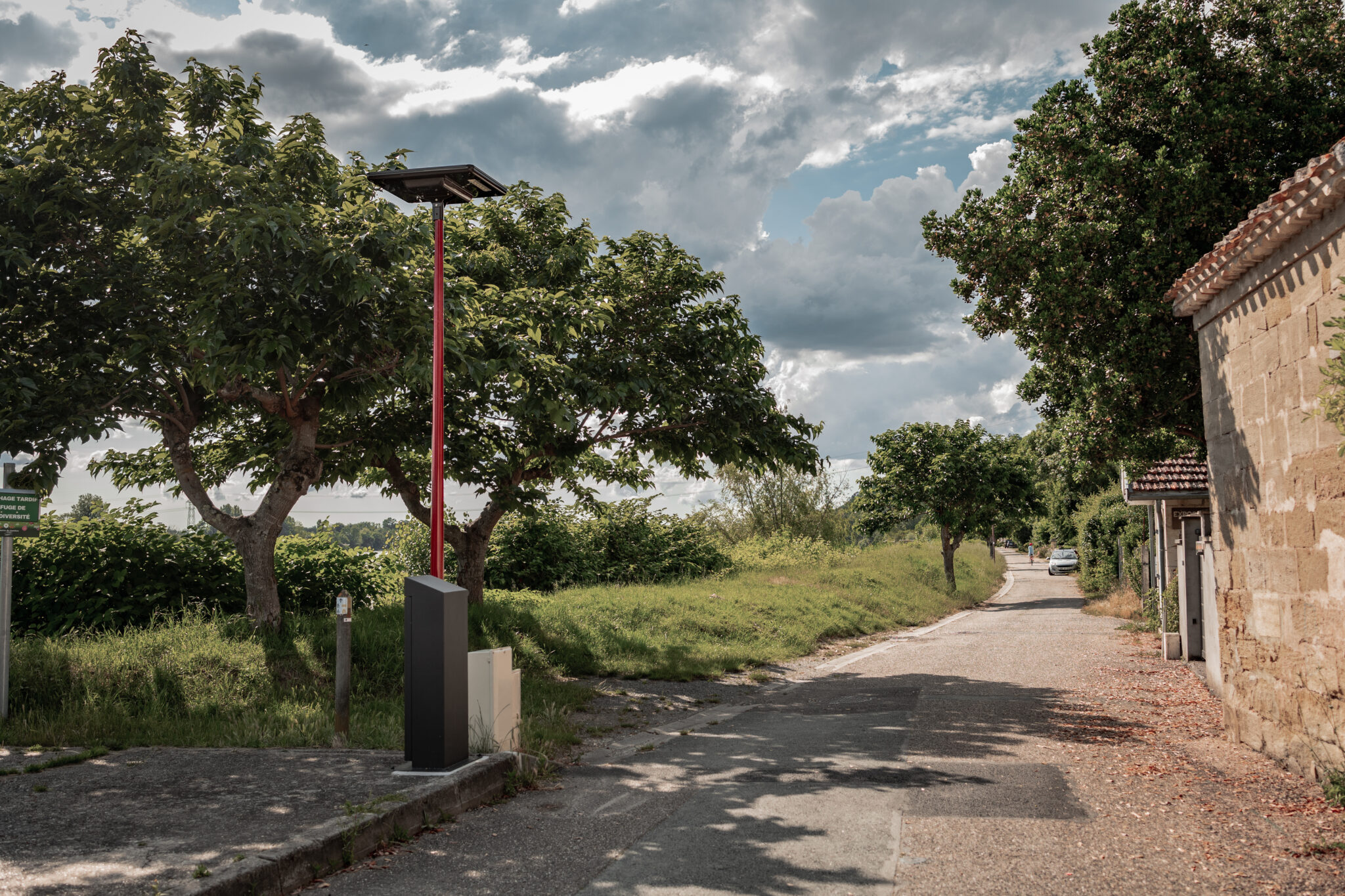
This is the case, for example, in Eysines, where iSSL+ solar luminaires were installed while keeping the existing masts.
Not every project requires the installation of a complete solar streetlight. For certain narrow areas, pathways, car parks or surroundings of public buildings, a solution mounted on a facade or a wall may be more suitable.
This approach provides a targeted light point, without creating a completely new infrastructure when the site already has a usable support.
Solar energy helps limit works related to electrical connection. This is particularly relevant in areas where the grid is absent, distant, damaged or costly to renovate.
In Eysines, solar lighting was also chosen to fight against cable theft, with a retrofit strategy that made it possible to reuse existing supports in good condition.
Solar retrofit can be an effective solution when a site needs to be lit quickly: car park, pedestrian pathway, residential area, riverbank, construction site or public space awaiting broader renovation works.
In Cambes, solar public lighting made it possible to respond to an urgent need by providing a reliable solution, without waiting for a complete renovation of the site.
Solar retrofit offers several advantages for local authorities, companies and site managers.
The first advantage of retrofit is that it allows existing supports to be reused when their condition allows it. This avoids replacing elements that are still functional.
This approach helps reduce costs, limit waste and simplify site modernization.
In an autonomous solar configuration, there is no need to create a new connection to the electrical grid. Works can therefore be simpler and less invasive.
This helps reduce disruption on site, especially in residential areas, car parks, public spaces or places already used by people.
A solar lighting system produces and stores its own energy. It can therefore operate autonomously, depending on the sizing carried out for the site.
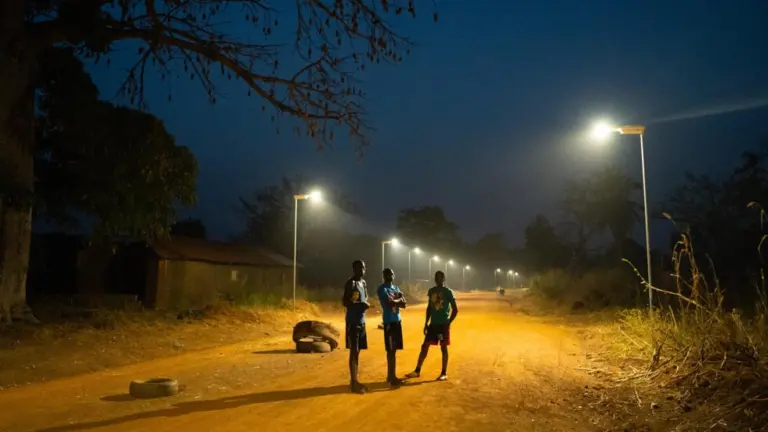
This energy autonomy is particularly useful in isolated areas, sites located far from the grid or places where connection works would be too complex.
Solar retrofit makes it possible to integrate more energy-efficient technologies, such as LEDs, adapted lighting profiles or presence detection.
The goal is not to provide more lighting, but to light better: in the right place, at the right time and with the right level of intensity. This approach helps reduce unnecessary energy consumption and limit light pollution.
By reusing certain existing supports when possible, solar retrofit also helps limit unnecessary replacements and extend the service life of infrastructure already in place.
Sunna Design offers several ranges of solar solutions that can be adapted to renovation, modernization or retrofit projects, depending on the characteristics of the site. Each project requires a preliminary analysis to check installation feasibility: type of support, orientation, solar exposure, expected lighting level, installation constraints and uses of the area.
Compact and quick to install, the iSSL range is suitable for many solar public lighting projects: pedestrian pathways, residential areas, car parks or public spaces. It can be relevant for projects using existing supports, when technical conditions allow it.
Versatile and high-performance, the UP range meets a wide variety of needs: streets, roads, cycle paths, car parks, pathways or isolated sites. Thanks to its adjustable solar panels, it optimizes solar energy collection according to the latitude and constraints of the site.
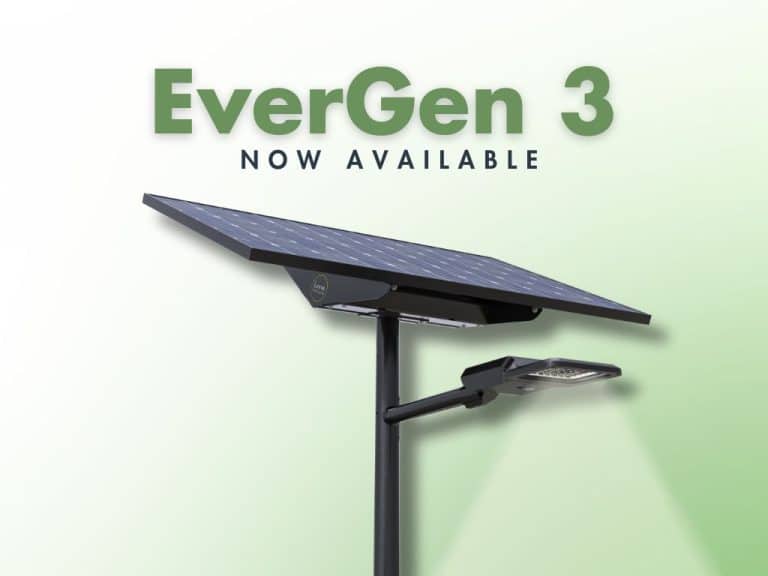
Depending on the needs of the project, other solutions such as the EverGen range can also be studied, especially for projects requiring a high-performance solar solution adapted to field constraints.
Solar retrofit can be a relevant solution for modernizing existing lighting, but it does not automatically apply to every site. Before starting a project, several criteria must be studied to ensure the performance, safety and durability of the installation.
The main points to check are:
If several of these criteria are met, solar retrofit may be an interesting option to study. However, each project must be analyzed on a case-by-case basis in order to choose a solution that is adapted, reliable and consistent with the constraints of the site.
To discover another example of a solar project in a demanding environment, you can consult the project carried out at Bordeaux Airport. To study the feasibility of a solar retrofit project, the Sunna Design teams can support you via the contact page.
Solar retrofit consists of modernizing existing lighting by reusing certain supports already in place, such as masts, poles, walls or facades. An autonomous solar solution can then be installed on these supports, provided that they are compatible with the project.
Yes, if the mast is in good condition and suitable for the chosen solution. A technical assessment is required to check its strength, height, orientation and ability to support the solar equipment under proper conditions.
No, not in an autonomous solar configuration. The system produces and stores its own energy thanks to the solar panel and battery. It can therefore operate without a new connection to the electrical grid.
Several criteria need to be analyzed: the condition of existing supports, solar exposure, lighting needs, installation height, technical constraints and site uses. A diagnosis makes it possible to determine whether solar retrofit is relevant and which solution is best suited