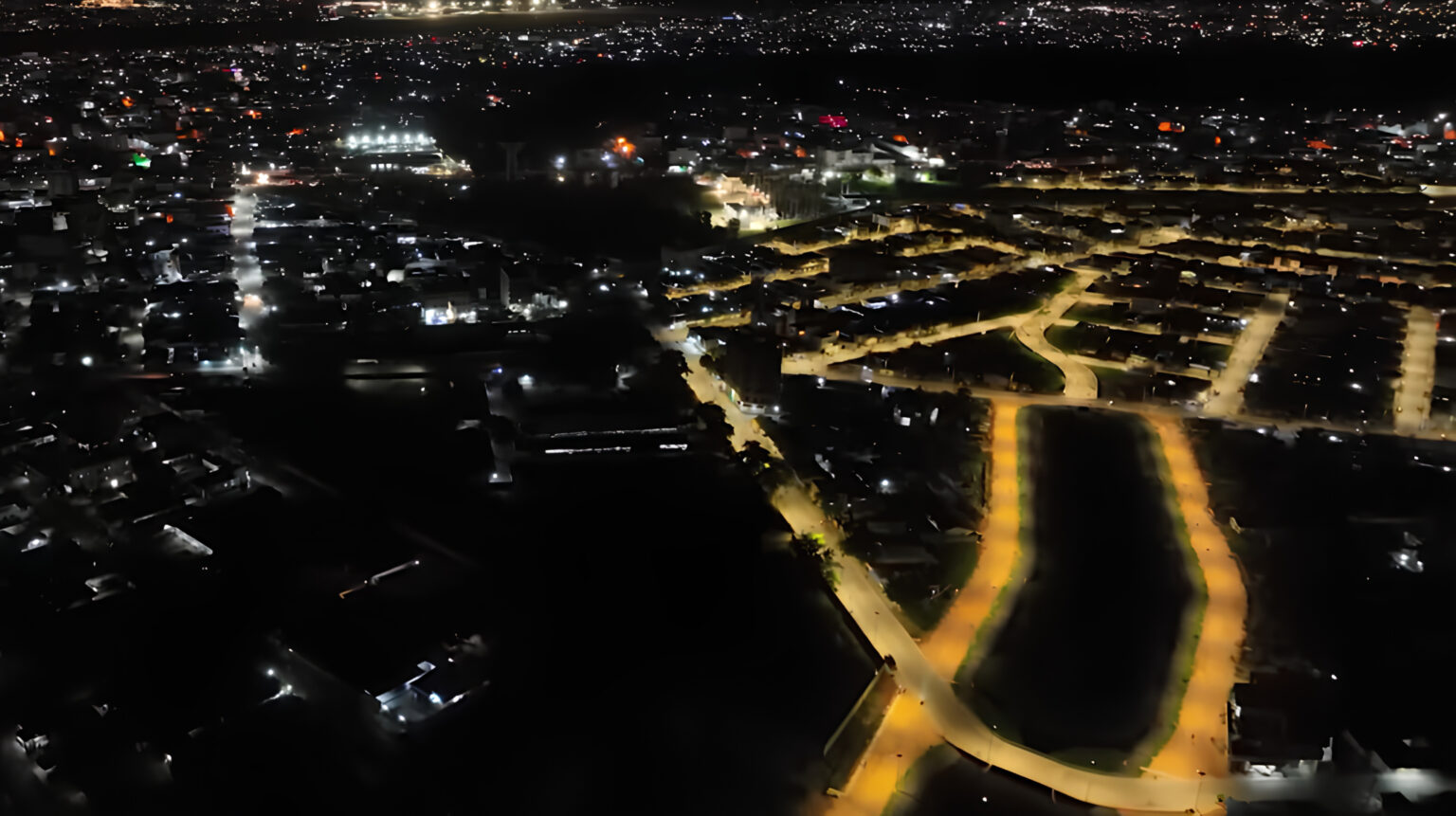
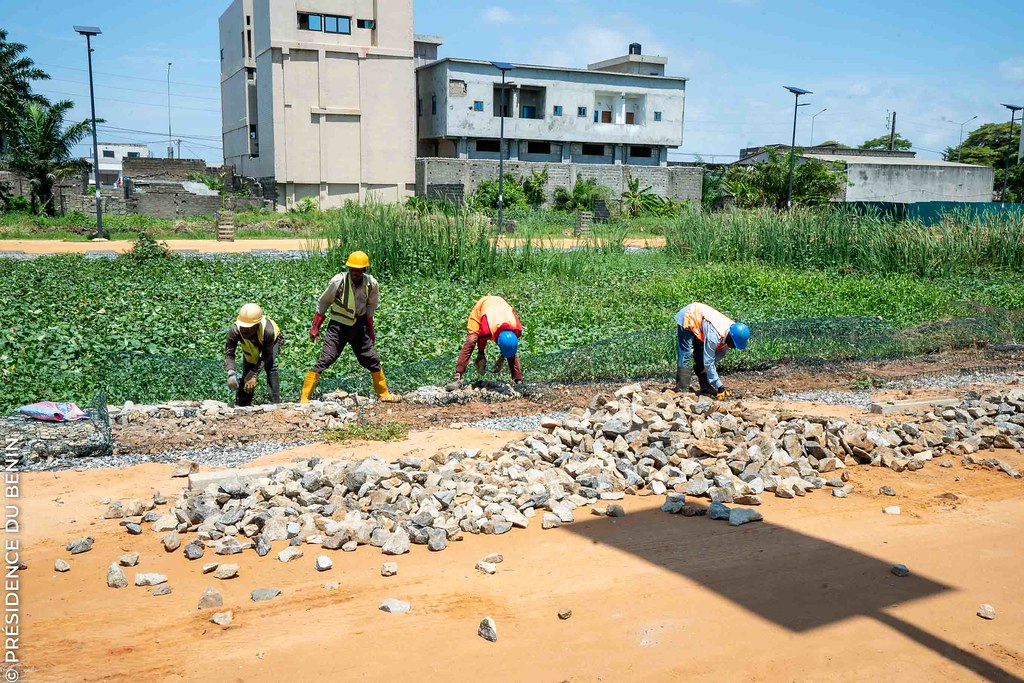
At Cotonou, the economic capital of Benin, stormwater management, safety and quality of life are closely interconnected. The Cotonou Stormwater Drainage Program (PAPC) was launched to provide a long-term response to flooding challenges while modernizing key neighborhoods and major urban corridors across the city. As part of this program, 591 autonomous solar street lights were deployed across nearly 4.8 kilometers of urban roadways to sustainably secure the upgraded infrastructure.
In this context, public lighting plays a critical role. Beyond visual comfort, it ensures infrastructure safety, supports nighttime activity and enables residents to fully reclaim public spaces. To support this transformation, Sunna Design was selected to deploy 591 autonomous solar street lights, in partnership with Sogea Satom and the local installer SERMEF.
Cotonou – BENIN
The initial study phases began in 2021, in a context of high technical requirements and strong international competition. The objective was clear: to deliver a reliable, high-performance and durable lighting solution tailored to Cotonou’s urban and climatic constraints.
Following project award, deployment was carried out progressively along the PAPC corridors. Several years after installation, the equipment continues to demonstrate robustness and operational stability, confirming the relevance of the technical choices made during the design phase.
This operational track record now stands as a strong indicator of reliability for African municipalities engaged in long-term infrastructure projects.
For the PAPC Cotonou project, Sunna Design went beyond equipment supply. The teams supported the project end-to-end, working closely with Sogea Satom and the local partner SERMEF.
Photometric and autonomy studies enabled the definition of a precise system design, ensuring lighting levels compliant with urban road safety requirements, including during periods of low solar irradiation.
This tailored approach made it possible to:

The project relied on EverGen, Sunna Design’s flagship high-power solar street lighting solution.
Each street light combines optimized photovoltaic generation, long-life LiFePO₄ lithium batteries and high-performance LED lighting. This architecture ensures uniform roadway illumination without grid connection and without fossil fuel consumption.
In total, 591 autonomous solar street lights were deployed across nearly 4.8 kilometers of urban roadways as part of the PAPC program, ensuring a coherent and structured lighting network at the city scale.
Thanks to this full autonomy, the city benefits from:
In an African context where grid access can represent a major technical and financial constraint, this autonomous solar solution, based on an intelligent energy architecture, stands out as a structuring and sustainable response.

On the ground, the impact is tangible. The equipped corridors are now fully integrated into neighborhood life. After nightfall, areas that were previously underused have become safe and active circulation zones. Public lighting enhances travel safety, supports evening economic activity and improves the overall sense of security for families. Women and children in particular benefit from a safer environment, encouraging long-term use of public infrastructure.
Each EverGen street light operates without electricity consumption from the grid and without CO₂ emissions during operation. Across all 591 installations, the project contributes to sustainably reducing the carbon footprint of urban infrastructure while limiting energy costs for the municipality. It fully aligns with the energy transition and climate resilience objectives promoted by the Beninese authorities.
Sunna Design confirms its ability to support African cities in modernizing their infrastructure through reliable, high-performance autonomous solar lighting solutions tailored to local realities.


Photos © Presidence Bénin & Sunna Design
Our experts support you in designing a solution tailored to your technical, economic and environmental challenges.
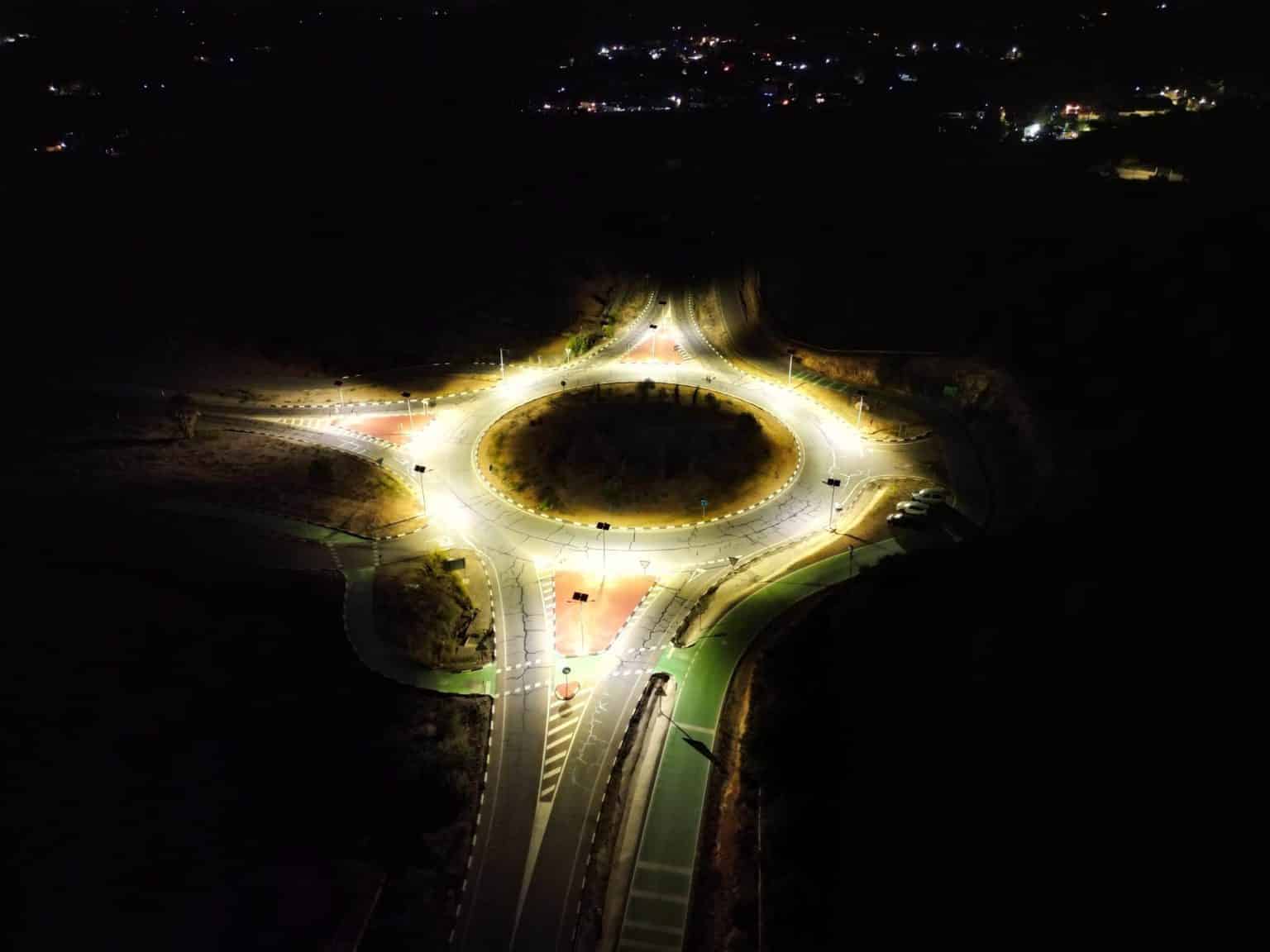
In Marines, the roundabout connecting the CV-25 and CV-333 roads plays a key role in traffic flow. However, it lacked any form of lighting, compromising nighttime visibility and increasing the risk of accidents. Its distance from the power grid made traditional connection both complex and costly, requiring heavy work and major traffic disruptions. To […]
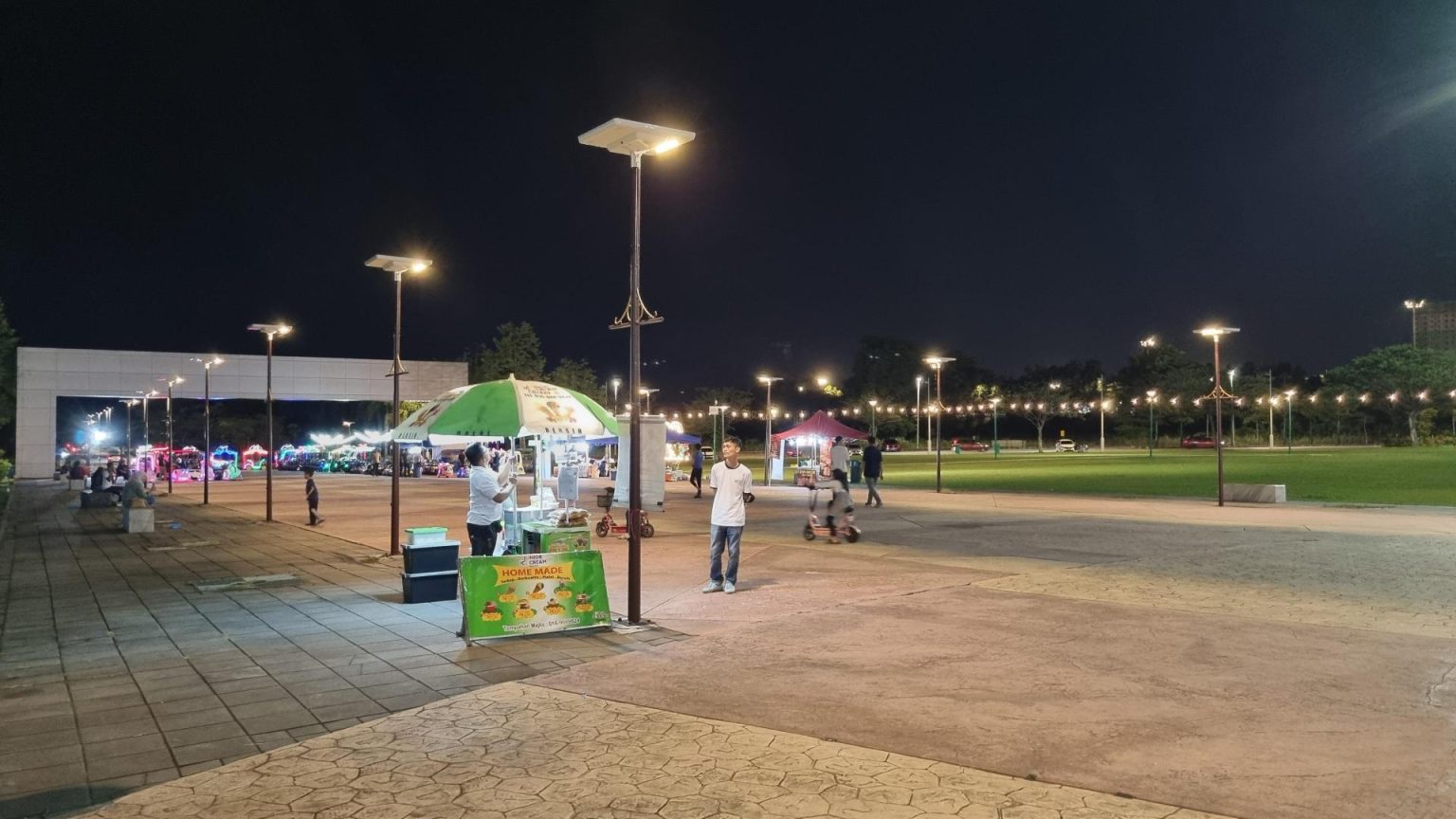
In Ipoh, the capital of Perak State in Malaysia, Bulatan Sultan Azlan Shah is no ordinary roundabout. This large intersection has been fully redeveloped into a vibrant public space: pedestrian zones, night markets, green areas and meeting places make it a central hub of local life.To support this urban transformation and improve safety for […]
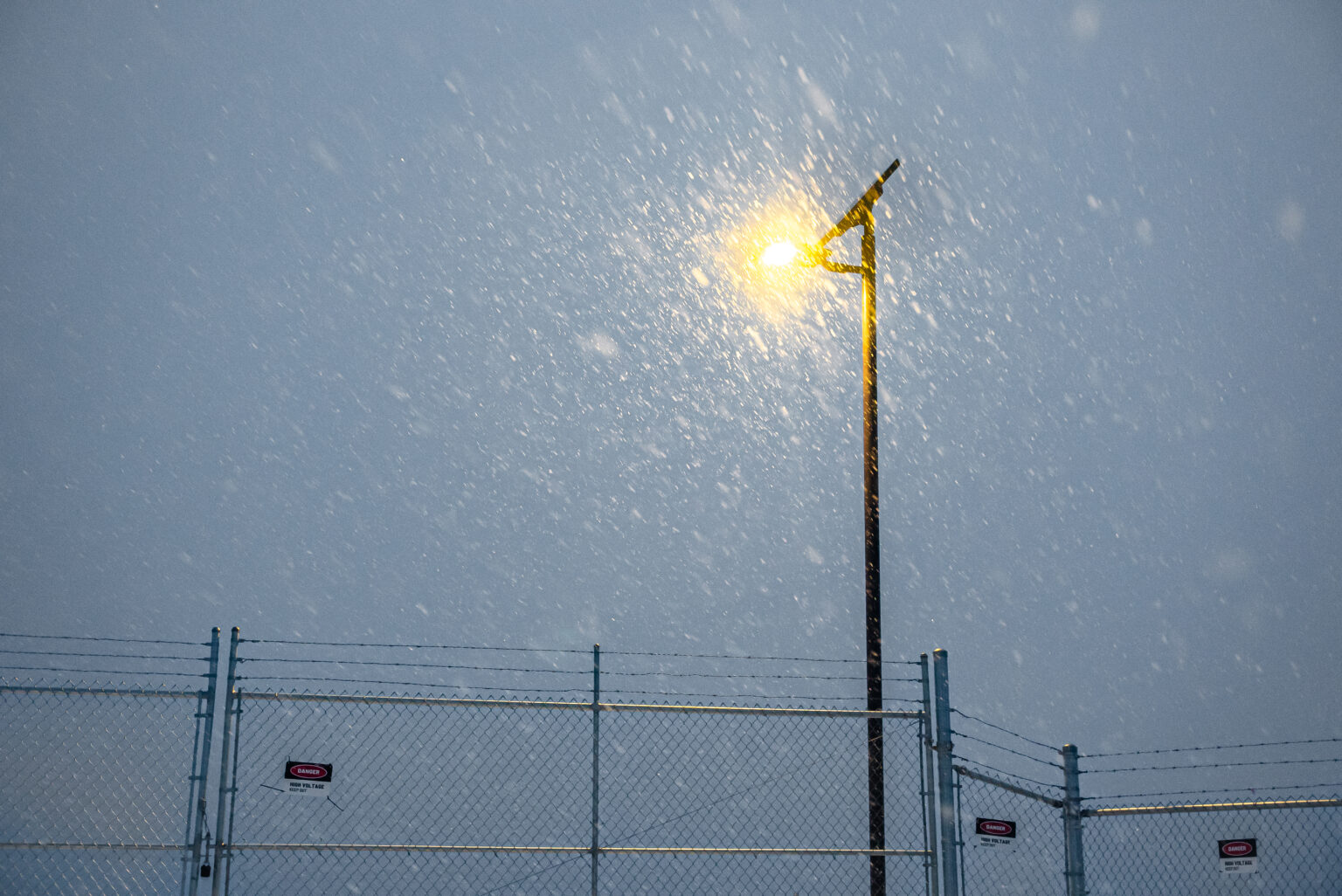
Amid Alberta’s ambitious energy transition, Travers Solar, Canada’s largest solar farm, stands as an iconic project. To ensure the safety of this strategic site and showcase the power of renewable energy,Sol by Sunna Design, the North American subsidiary of Sunna Design, implemented an innovative solar lighting solution designed to withstand the region’s extreme climatic […]
At Cotonou, the economic capital of Benin, stormwater management, safety and quality of life are closely interconnected. The Cotonou Stormwater Drainage Program (PAPC) was launched to provide a long-term response to flooding challenges while modernizing key neighborhoods and major urban corridors across the city. As part of this program, 591 autonomous solar street lights […]