About solar lighting 10 February 2026
When discussing energy efficiency in buildings, the same topics almost always come up: insulation, heating, ventilation, thermal renovation. These are, of course, essential levers. But there is another one, often overlooked, despite being visible, concrete and immediately actionable: lighting.
More specifically, outdoor lighting around buildings entrances, pedestrian pathways, parking areas, circulation zones and exterior spaces. What if the energy transition started… right there?
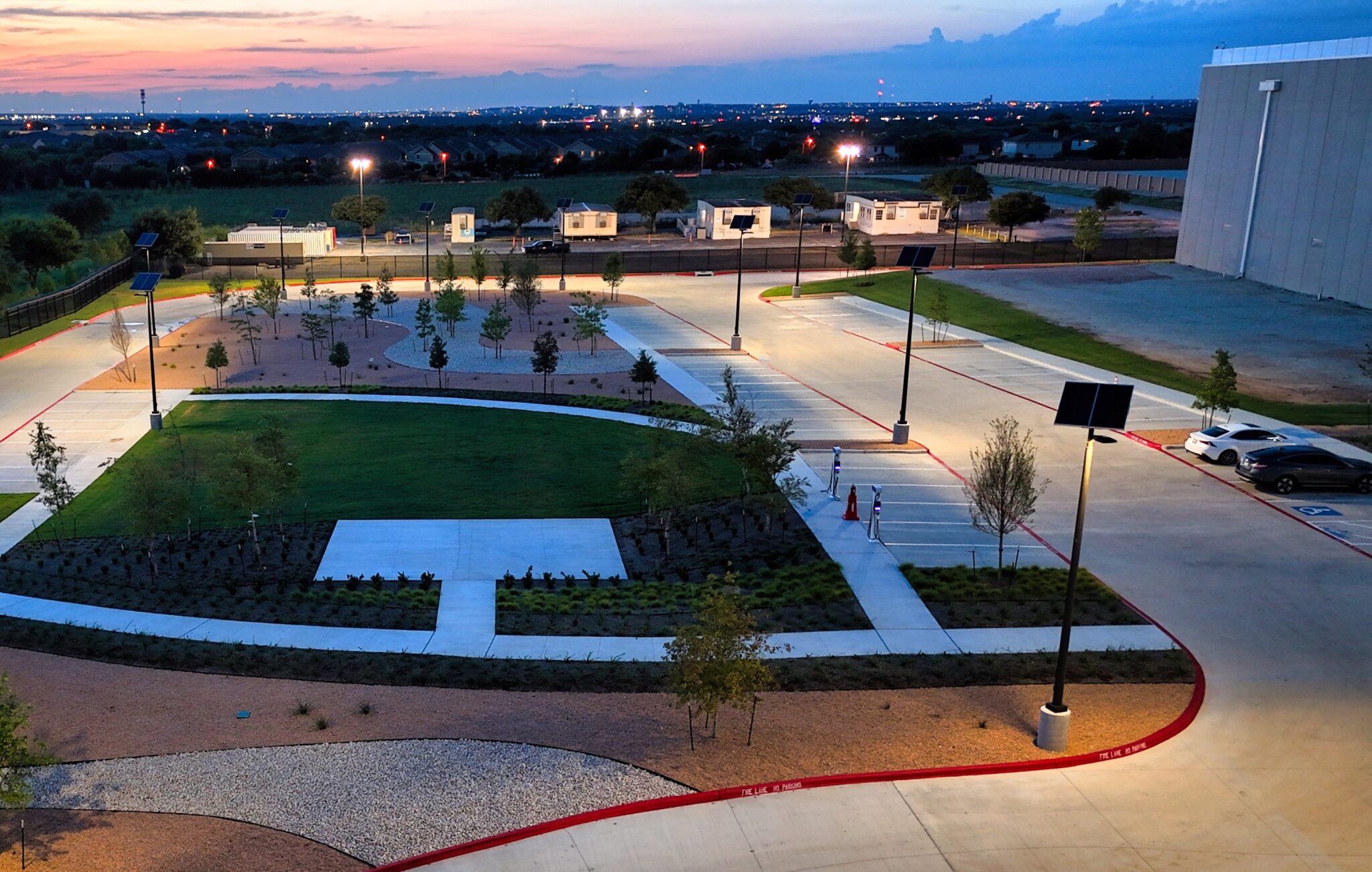
It is often overlooked, yet public and outdoor lighting represents a significant share of electricity consumption for local authorities. In France, it can account for up to 41% of electricity consumption and around 37% of municipalities’ electricity bills.
Why such a significant share?
because lighting operates for long periods (often throughout the night),
because it is present everywhere,
and because it sometimes continues to operate even when buildings are closed.
In other words, even when discussing the energy performance of buildings, outdoor lighting is very much part of the equation. A building does not stop at its walls: it is embedded in an environment shaped by uses, movements and safety needs that depend directly on lighting quality.
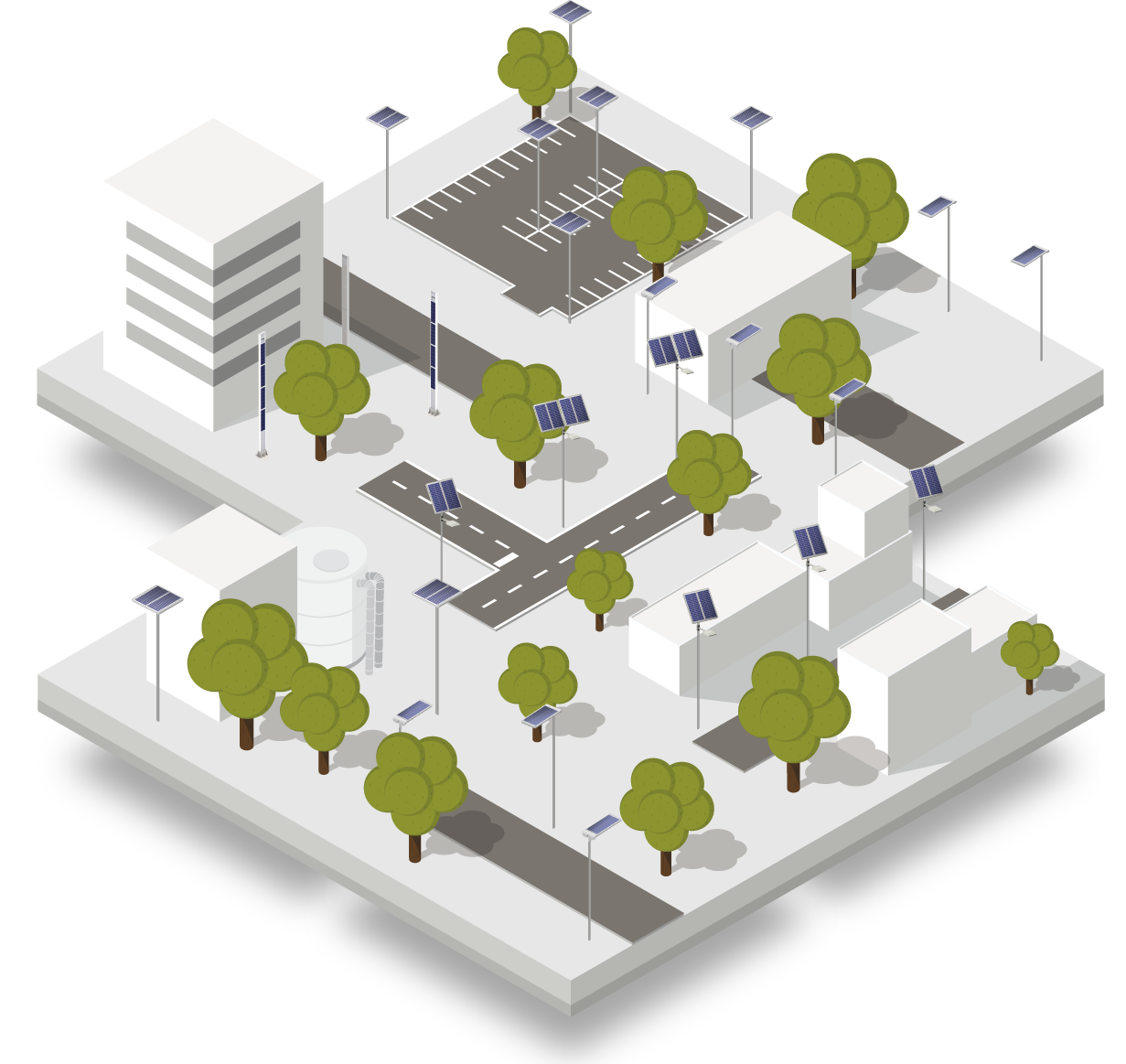
A building and its outdoor spaces form a functional whole: lighting structures uses beyond the walls.
Unlike some large-scale energy renovation projects, lighting offers a major advantage: it can be optimized quickly.
Upgrading or rethinking lighting makes it possible to:
immediately improve comfort and safety,
reduce energy consumption,
make energy efficiency efforts visible and measurable.
The transition to LED lighting is a good example: in France, it has already enabled an approximately 29% reduction in electricity consumption related to public lighting.
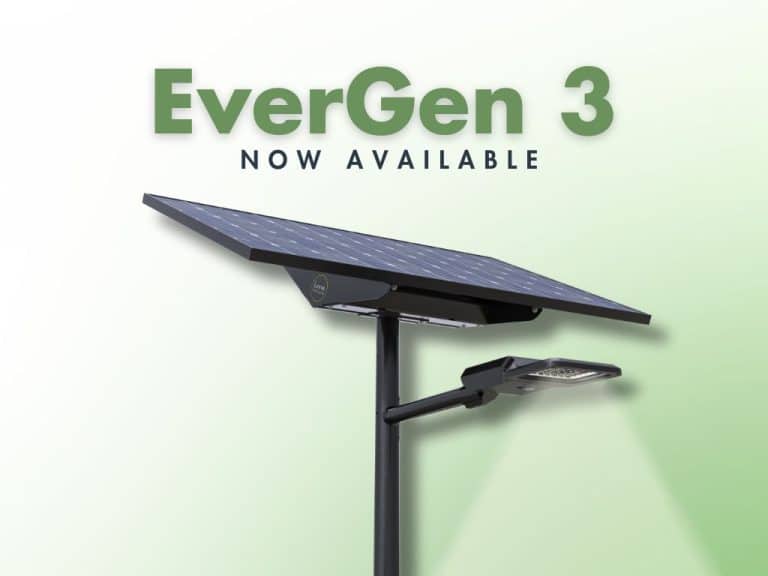
Today, another approach fully aligns with this energy efficiency logic: solar lighting.
Solar lighting relies on a simple principle: producing locally the energy required for lighting thanks to the sun, then storing it for use at night.
This energy autonomy fundamentally changes how lighting projects are designed. Here, energy is produced, stored and consumed on site. It is therefore considered a precious resource, to be used wisely.
This approach naturally encourages:
precise system sizing,
reflection on actual uses,
a design approach focused on energy sobriety.
One of the key advantages of solar lighting is that it integrates energy efficiency from the very design phase. Because energy is produced locally, each project encourages asking the right questions:
Where is light truly needed?
At what level?
At which times?
As a result, lighting is no longer installed out of habit, but only where and when it is needed. This approach is fully aligned with current objectives for energy sobriety and energy performance of buildings and their surroundings.
Talking about energy efficiency is not just about counting kilowatt-hours. It also means adopting a comprehensive view of the environmental impact of projects.
Solar lighting in particular makes it possible to:
limit heavy infrastructure (cabling, trenches, civil engineering),
reduce land artificialization related to works,
equip or secure areas without extending the grid,
offer a standalone and resilient solution.
In many contexts (parking areas, pedestrian pathways, site extensions, peripheral zones), this approach fits perfectly into a pragmatic and measurable energy transition.
Contrary to some common misconceptions, solar lighting is no longer a marginal solution. It is now a mature technology, based on proven components designed to last.
When assessed in terms of total project cost, solar lighting stands out thanks to:
no electrical grid connection,
no grid electricity consumption during operation,
faster and lighter installation works,
better cost control over time.
In many cases, solar lighting does not require comparison: it naturally stands out as an economic and energy-efficient solution.
Energy efficiency does not rely solely on technology, but also on how lighting is used. Solar lighting encourages intelligent approaches:
adjusting lighting levels according to time schedules,
automatic dimming during periods of low use,
prioritizing areas that are actually used.

Energy efficiency relies as much on lighting quality as on the amount of light produced.
Studies on controlled lighting show that adapting lighting to actual uses can significantly reduce energy consumption, with savings of over 50% in some cases, while maintaining comfort and safety.
Often underestimated, lighting is nonetheless an immediate, visible and concrete lever for improving the energy performance of buildings and their outdoor spaces. Starting with lighting is not a minor detail: it is often the simplest first step toward sustainable energy performance.
Our experts can support you in designing a solution adapted to your technical, economic and environmental needs.