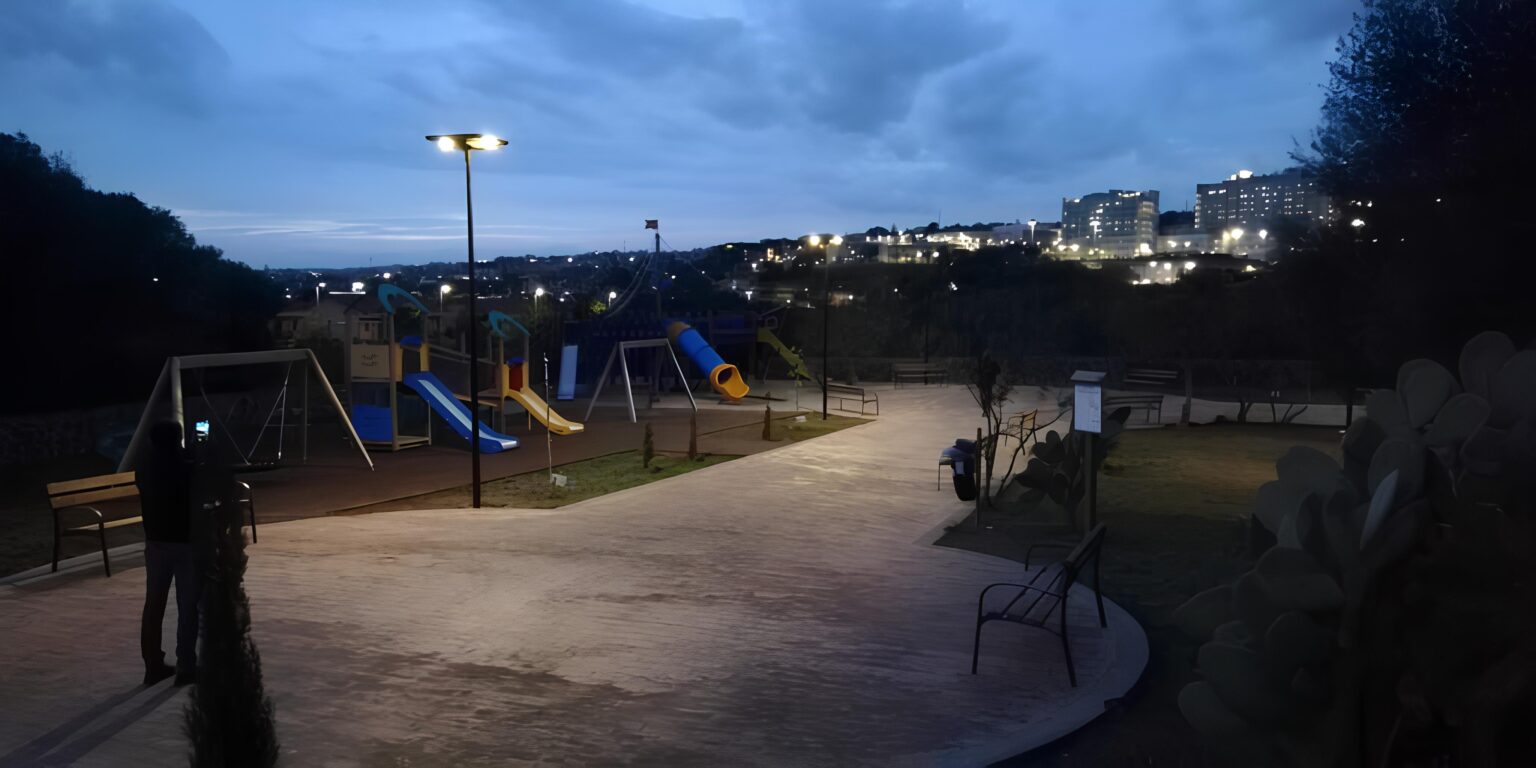
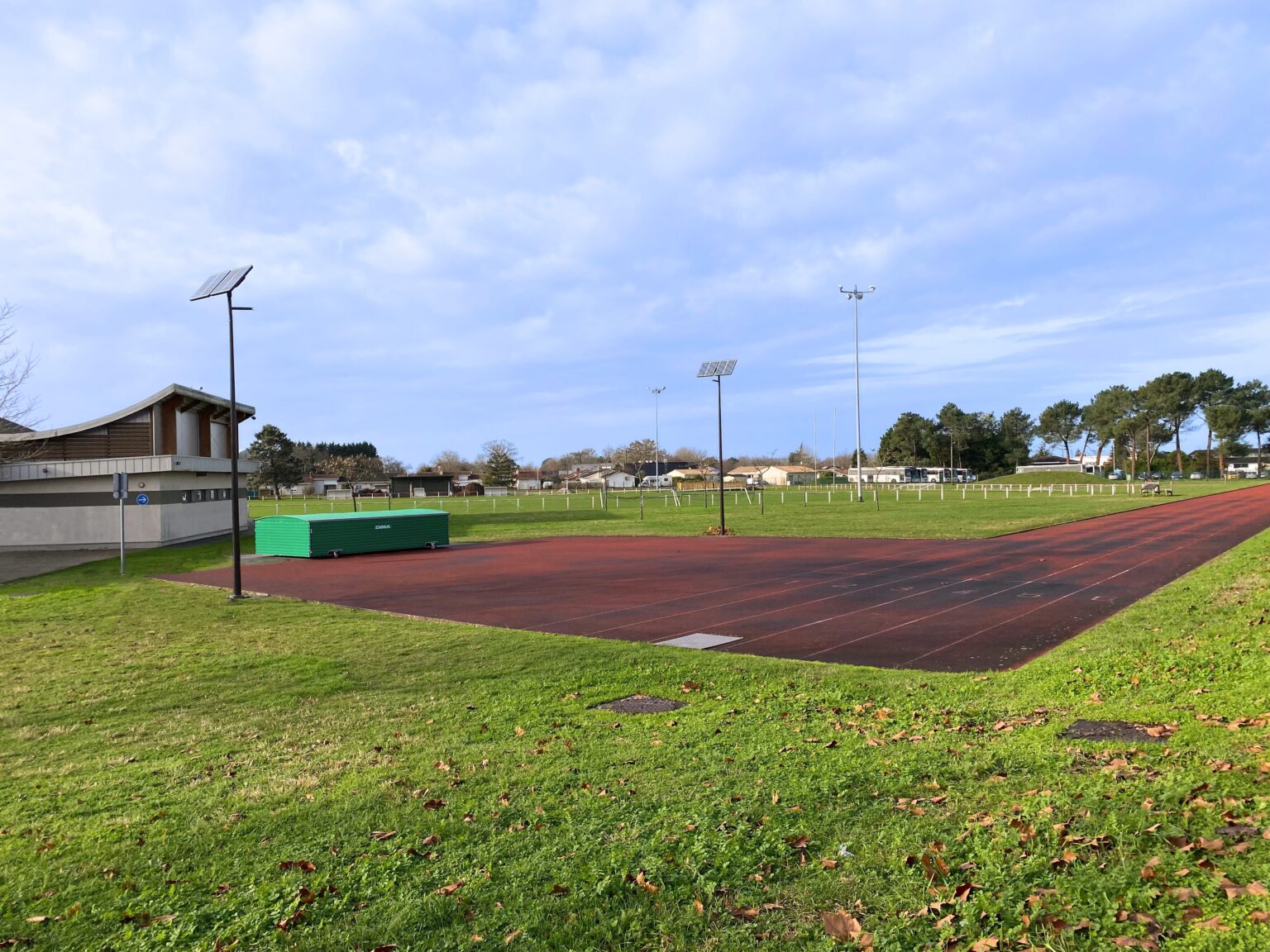
Parks, gardens, squares, playgrounds, sports fields, game courts, solar lighting solves the lighting deficits of many public spaces. Lack of network, aging electrical installations, land constraints, the solar street lamp answers all problems by offering a powerful, reliable and sustainable lighting, adapted to each practice.

Solar lighting is transforming the design of recreational and sports areas such as playgrounds and multi-sport courts. This technology combines energy efficiency with a positive environmental impact, providing high-quality lighting that enhances safety and improves the attractiveness of these spaces after sunset. Every public area requires tailored lighting solutions. Sunna Design offers a range of solar streetlights with an intelligent lighting system that ensures safe nighttime visibility for pedestrians while preserving the surrounding biodiversity.
Autonomous solar lighting is particularly suitable for many recreational spaces:
Urban parks
Children’s playgrounds
Leisure parks and recreational areas
Walking paths
Outdoor sports parks
Solar lighting can be installed in a wide variety of locations, including areas far from the electrical grid. This flexibility makes it easy to illuminate pathways, cycle lanes or recreational areas without trenching work or electrical connection. Solar streetlights integrate naturally into the environment and provide an efficient lighting solution that is quick to deploy and well suited to natural spaces.
Solar lighting helps significantly reduce infrastructure and operating costs for public spaces. The absence of a grid connection eliminates cabling work and removes electricity bills. Modern solar lighting solutions are designed to operate autonomously for many years with minimal maintenance.
Appropriate lighting improves safety in parks and recreational spaces, particularly along pathways, cycle lanes and pedestrian areas. By ensuring better nighttime visibility, lighting helps prevent accidents and makes these spaces more welcoming for walkers, athletes and families.
Installing solar lighting helps enhance parks and recreational spaces by allowing their use after sunset. It also reflects the commitment of local authorities to sustainable and innovative solutions for urban development.

Parks and natural areas require special attention to limit the impact of artificial lighting.
Intelligent solar lighting systems make it possible to:
dim the lighting
motion detection
reduced light intensity during low-activity periods
This helps limit light pollution while ensuring the safety of users.
up to 70% savings on infrastructure works
no grid connection required
installation up to 3 times faster
significant reduction in CO₂ emissions

Sizing solar lighting in a park depends on several parameters related to the site’s usage and configuration:
pathway width to be illuminated
pole height and luminaire power
spacing between streetlights
level of nighttime use
A photometric study helps determine the optimal layout to ensure efficient lighting while optimizing the number of luminaires installed.
Our experts support you in designing a solution tailored to your technical, economic and environmental challenges.
This project illustrates how autonomous solar lighting can improve safety and enhance public recreational spaces.
Located along the East River, Pier 42 is today one of New York City’s most emblematic urban redevelopment projects. Long occupied by port and industrial infrastructure, the site has been transformed into a contemporary public park, designed to reconnect Lower East Side residents with their waterfront. Within this large-scale project, public lighting plays a […]
In the lush province of Catania, the “Jean Calogero” park in Cannizzaro, Aci Castello, pays homage to the famous local painter within a natural, relaxing setting. Opened in March 2023, the park now features a children’s playground, a fitness area, and a dog relaxation zone. Driven by Mayor Dr. Carmelo Scandurra and in collaboration […]
In today’s world, sustainability is at the forefront of municipal concerns. Cities are actively seeking innovative solutions that merge ecological benefits with efficiency. Within this framework, the town of Lesparre-Médoc, in Gironde, has opted for Sunna Design’s autonomous solar lighting solutions to equip its athletic areas, including high jump and long jump tracks. Parc […]
Nestled in the picturesque town of Venice in Sarasota County, Florida, Wellen Park stands out with its modern urban development and community planning. Its top-rated trails provide a haven for residents, making them an integral part of the community. Wellen Park developers went for SOL by Sunna Design’s cutting-edge lighting solutions to enhance the […]
Yes. Autonomous solar streetlights can illuminate large parks without requiring a grid connection. They can be installed along pathways, cycle lanes or pedestrian areas to ensure continuous lighting. The system is simply sized according to the site configuration and its solar exposure.
Autonomous solar lighting eliminates the need for trenching, grid connection and heavy infrastructure works. It is particularly well suited for urban redevelopment projects such as parks, where sustainability and flexibility are essential.
Yes, provided the solar streetlights are installed in areas with sufficient sun exposure and the system is properly sized according to local solar conditions.
Yes. Intelligent lighting systems allow programmed dimming or activate the light only when motion is detected.